
















How DevOps Managed Services Simplify Delivery with Azure?
DevOps managed services help organizations streamline software delivery by automating and managing CI/CD workflows, reducing deployment risk, and improving quality — especially...
At Bloom, we help organizations accelerate software delivery with Azure DevOps Integration Services, enabling seamless collaboration, automated workflows, faster releases, and enhanced development efficiency across the entire application lifecycle.
 Streamlined release pipelines
 Improved code delivery speed
 Optimize Costs with Smart Solutions
 24/7 Support and Maintenance
Fill Out the Form and Our Experts Will Contact You Within 24 Hrs


Improve workflow efficiency by integrating applications, tools, and cloud environments on Azure.
Start Your Integration Journey
Connect with numerous external tools and platforms for enhancing Azure DevOps workflows to ensure smooth collaboration, enhanced automation, and increased productivity among developers and operations teams. It enables the teams to expedite processes, keep visibility, and speed up software delivery.

Allow synchronization of tasks, issues, and project updates between the development and project management teams using Azure DevOps integration services. This integration promotes alignment, transparency, and efficient tracking of work items during the software development lifecycle.

Pipeline update notifications, changes in work items, and build status shall flow into your communication channels. Maintain critical awareness amongst the team, allowing quick decision-making.
GitHub repositories can be integrated with ITPA to streamline source control, foster collaboration, and facilitate the creation of CI/CD pipelines. This linkage ensures smooth management of code and deployments.

Facilitate DevOps deployments via the Cloud Services Catalog, automate approval of changes, and manage deployed resources fairly and majorly. This integration helps in streamlining IT operations while enforcing compliance with organizational policies.

Speeds up build pipelines and other resource-intensive development tasks using Azure DevOps integration services, so developers do not need to wait for compilation and testing. Developers deliver software faster with better use of available compute resources.
Our Azure DevOps Integration Services process takes care of everything from configuration, implementation, integration, and migration to customization and support so that you get automated workflows with smooth collaboration, enhanced security, and delivery of reliable, high-grade software across enterprise environments.

 01
01
We customize process templates; implement security policies; deploy YAML pipeline templates; and configure artifact, test, and environment management systems so that development, testing, and production all work in unison.
 02
02
Deploy enterprise environments with Azure DevOps integration services, including customized Boards, structured Repos, multi-stage YAML pipelines, Test Plans, and managed Artifacts. Deployment automation is performed with ARM templates, Azure CLI, and PowerShell for repeatability and reliability.
 03
03
Integrate Azure DevOps with enterprise applications, Microsoft 365, testing platforms, and monitoring tools smoothly via REST APIs, Webhooks, and custom connectors, so that all workflows run smoothly while interacting with these systems.
 04
04
Transfer repositories, work items, pipelines, and test assets from legacy systems using Azure DevOps integration services with migration tools, Azure Data Factory, SSIS, and custom PowerShell scripts, all while maintaining the integrity of information.
 05
05
Build custom dashboards, extensions, webhook automations, and reporting solutions to enhance Azure DevOps. Leverage Azure DevOps REST API, . NET Core frameworks, and Node.js microservices running on Azure App Service.
 06
06
Continuously monitor and work on resolving issues proactively, investigate pipeline issues, and optimize pipelines. Add 24-hour reliability and responsiveness to ensure smooth DevOps operations for large teams.

























































































The blended Azure DevOps integration services from Bloom foster collaboration, create automation for CI/CD pipelines, elevate software quality, and secure applications on an enterprise-grade platform. They allow the faster processing of requests, efficient work methodologies, and scalable solutions that are reliable for a modern-day developer community.

Bloom leverages Azure DevOps for fostering transparent communications and collaboration across teams. Centralized tools for project tracking, code reviews, and feedback mechanisms break the silos, streamline workflows, and lead to timely decisions.

CI/CD pipelines automation is provided under Bloom’s Azure DevOps services. Minimization of human intervention contributes to reliability in application deployments while speeding time-to-market. Execution with less scope of human error is the fastest route for reliable application deployments.

Wherever repetitive tasks keep surfacing and workflows slow development teams down, Bloom uses Azure DevOps integration services to automate them, allowing developers to bring their ideas to fruition rather than pondering over infrastructure or manual processes.

It supports a wide choice of languages and platforms (Windows, Linux, macOS), or any other cloud providers, as needed. Its services can also be used in conjunction with existing tools independently, enhancing the enterprise environment’s flexibility.

Automation and optimized workflows using Azure DevOps integration services bring in large-scale efficiencies in terms of time and cost by minimizing manual work, shortening development cycles, and maximizing resource utilization. This is also an attractive feature for smaller teams that can capitalize on the usage of the Azure DevOps Consulting Services free tier.

Bloom uses Azure DevOps’ comprehensive project tracking, task management, and reporting functionality to deliver complete visibility across the development lifecycle. This helps teams to increase collaboration, optimize resource allocation, track progress in real time, and ensure that projects are delivered on time.

Bloom ensures that Azure DevOps blends effortlessly with your current development stack, whether it’s third-party tools, legacy systems, or modern cloud-native platforms. This smooth integration enhances operational consistency and minimizes disruption, allowing teams to adopt DevOps practices without overhauling their entire environment.

With built-in analytics, dashboards, and performance metrics in Azure DevOps, Bloom empowers organizations with actionable insights. These real-time intelligence capabilities help teams identify bottlenecks, measure productivity, enhance pipeline performance, and continually optimize delivery cycles.

















We help businesses integrate applications, systems, and workflows to improve operational efficiency using Azure integration solutions.














The client was releasing software manually, which caused delays, errors, and slowed down innovation. Their small team needed a faster and more reliable way to deliver new features without increasing risk.
We automated their software release process using Azure DevOps. Confirmed updates could now be deployed quickly and safely, with fewer issues. This helped the team launch features faster, reduce errors, and focus more on building great products instead of managing deployments.
Read Case Study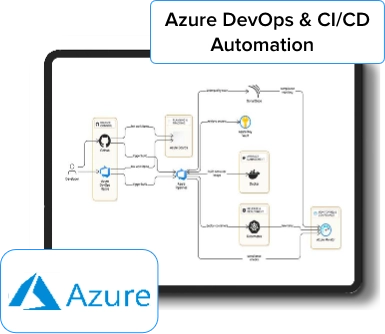
The client faced frequent issues during software updates, which caused delays and downtime in systems used by supply chain teams, retail partners, and customer-facing platforms. Manual processes made it hard to release updates quickly in a fast-moving market.
We automated and standardized their software release process using Azure DevOps. This reduced errors, sped up deployments, and made it easier for teams to launch new digital initiatives faster, helping the business stay competitive and respond quickly to market demands.
Read Case Study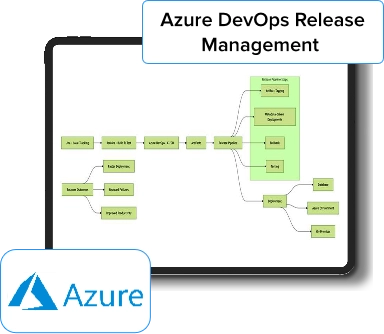
Different teams were using separate tools and manual processes to release software, which caused delays, errors, and poor coordination across plants. The client needed a simpler and more consistent way to manage software updates.
We brought all their tools and processes into a single Azure DevOps setup. By automating releases and improving visibility, teams could deliver updates faster, with fewer issues, and work together more effectively across the organization.
Read Case Study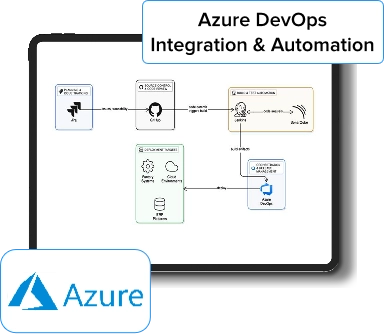
Connect Jira and Azure DevOps with a dependable and flexible integration solution that helps out productivity in cross-team and cross-company collaborations. Implement bidirectional Jira Azure DevOps integration tools to automate data transfer workflows and eliminate silos.
The four pillars of Continuous Integration are Version Control, Package Management, Continuous Integration Systems, and Automated Build Processes. They make the development process seamless, encouraging collaboration among team members, hence leading to improved quality of the software being produced.
Integrations allow Azure DevOps and project management software to intertwine, as well as with communication platforms, testing frameworks, monitoring tools, and cloud services to streamline workflows and facilitate collaboration across teams.
Automated work items, pipelines, and releases come to life, have updates applied, or are tracked with API integration, thus alleviating the need for manual input and cementing the processes that can be repeated vividly by development teams.
The principal tools for planning, source control, building, testing, and deploying applications are Azure Boards, Azure Repos, Azure Pipelines, Azure Test Plans, and Azure Artifacts.
Using Azure DevOps services, teams can have real-time dashboards, reporting, and analytics for tracking progress, bottlenecks, and data-based decisions.
Yes, Azure DevOps integrates with Azure Monitor, Application Insights, and third-party monitoring solutions to track application health and trigger alerts accordingly.
Azure Test Plans and Pipelines allow automated test integration, thus allowing continuous testing, faster defect detection, and quality assurance of the software.
We Integrate Tools, Pipelines, and Workflows Seamlessly.