DevOps vs DevSecOps: What’s the Difference?
Software development is progressing quickly these days, and updates come out more often than ever. This puts a lot of pressure on teams to add new features faster while keeping the system stable and safe. Automation, CI/CD pipelines, and cloud-native architectures have streamlined development, but they have also made security complex and attacks prevalent.
This transformation has made the debate over DevOps vs DevSecOps more important than ever. DevOps changed how software is delivered by improving collaboration and automation. DevSecOps takes this idea a step further by embedding security into every step of the development lifecycle.
To make development pipelines that balance speed, reliability, and security, you need to know what the difference is between DevOps and DevSecOps.
Table of Contents
What is DevOps?
DevOps is the process of developing software that combines software development (Dev) and IT operations (Ops) to make it easier for teams to collaborate and speed up the software delivery lifecycle.
Traditionally, operations teams took care of deployment and maintenance while development teams wrote code. DevOps eliminates this barrier and encourages shared responsibility.
Core principles of DevOps are:
- Automating the processes of building and deploying.
- Continuous Integration and Continuous Delivery (CI/CD).
- Infrastructure as Code (IaC).
- Faster loops of feedback between teams.
- Better teamwork between operations and development.
The main goal is to deliver software updates quickly while maintaining stability.
A Typical DevOps Workflow
A standard DevOps pipeline includes:+
- Code development.
- Control of versions.
- Integration that happens all the time.
- Testing that is done automatically.
- Deployment.
- Monitoring and giving feedback.
This model accelerates delivery but often creates a gap in security responsibility. This barrier is a primary factor prompting organizations to assess DevOps vs DevSecOps during the modernization of their development methodologies.
What is DevSecOps?
DevSecOps builds on the DevOps philosophy by adding security practices directly into the development process.
DevSecOps doesn’t just add security at the end of the pipeline; it adds it at every step. This is often called “shift-left security,” which means finding and fixing security gaps early in the development process.
This basic change in how security is integrated is what makes DevOps and DevSecOps different.
Its key elements are:
- Automated security checks in CI/CD pipelines.
- Safe coding practices.
- Scanning for vulnerabilities all the time.
- Checks for compliance and security monitoring.
- Collaboration among development, operations, and security teams.
Effective DevSecOps practices not only find loopholes in security early, but they also create an environment where everyone is responsible for security. In the debate of DevOps vs DevSecOps, the strategic shift in security integration defines the latter.
What is the Difference Between DevOps and DevSecOps?
In the discussion of DevOps vs DevSecOps, it is important to look at how they each handle security, collaboration, and development workflows.
| Area of Comparison | DevOps | DevSecOps |
| Primary Objective | Focuses on delivering software faster by improving collaboration between development and operations teams. | Focuses on delivering software quickly while embedding security throughout the development lifecycle. |
| Security Approach | Security is often addressed later in the release cycle, usually before deployment. | Security is integrated from the beginning using shift-left security principles. |
| Team Collaboration | Collaboration mainly happens between development and operations teams. | Collaboration expands to include development, security, and operations teams working together. |
| Testing Process | Testing primarily focuses on functionality, performance, and reliability. | Testing includes functional testing plus automated security checks such as vulnerability scanning. |
| CI/CD Pipeline | CI/CD pipelines automate building, testing, and deployment of applications. | A DevSecOps pipeline includes automated security testing, code analysis, and compliance checks. |
| Risk Detection | Security vulnerabilities may be detected late in the development cycle. | Security issues are detected earlier through automated scanning and continuous monitoring. |
| Development Mindset | Emphasizes speed, efficiency, and continuous delivery. | Emphasizes secure continuous delivery by combining development, security, and operations practices. |
In simple words, DevOps transformed the way software is made and delivered. DevSecOps further strengthens this approach by adding security directly to the pipeline. This comparison shows how modern development is moving away from fast delivery and toward secure and resilient software pipelines. This is why the debate over DevOps vs DevSecOps is getting more evident.
Start integrating security into your CI/CD pipelines today

How does DevSecOps work in CI/CD Pipelines?
In today’s development, security can’t just be a last step before deployment. A DevSecOps pipeline adds automated security checks to the entire CI/CD lifecycle, which helps find and fix security gaps earlier in the development process.
| CI/CD Stage | What Happens | Security Activity |
| Code Commit | Developers push new code changes to the repository, triggering the pipeline. | Automated scans review the code for exposed credentials, insecure patterns, or common vulnerabilities before the build begins. |
| Build Stage | The application is compiled and packaged so it can move to the testing phase. | Static Application Security Testing (SAST) analyzes the source code to identify potential security flaws early in development. |
| Dependency Check | External libraries and open-source packages are added during the build process. | Tools scan dependencies to detect known vulnerabilities or outdated components that may introduce security risks. |
| Testing Environment | The application is deployed to a staging environment for functional testing. | Dynamic Application Security Testing (DAST) evaluates the running application to detect runtime vulnerabilities. |
| Container Validation | Container images or infrastructure configurations are prepared for deployment. | Security checks validate container images and configurations to prevent misconfigurations or hidden threats. |
| Runtime Monitoring | The application is deployed to production and begins serving users. | Continuous monitoring detects suspicious behavior, security incidents, or newly discovered vulnerabilities. |
It also marks a major shift in the discussion of DevOps vs DevSecOps since security is built into the whole pipeline instead of just being added before release.
Looking to optimize your DevOps workflows? Explore our Azure DevOps consulting services
How does DevSecOps Improve DevOps Security?
One of the primary reasons organizations use DevSecOps is to improve their current DevOps security practices without slowing down development. By adding security checks directly into the development process, teams can find and fix security anomalies earlier in the software life cycle. This makes the debate of DevOps vs DevSecOps even more intense.
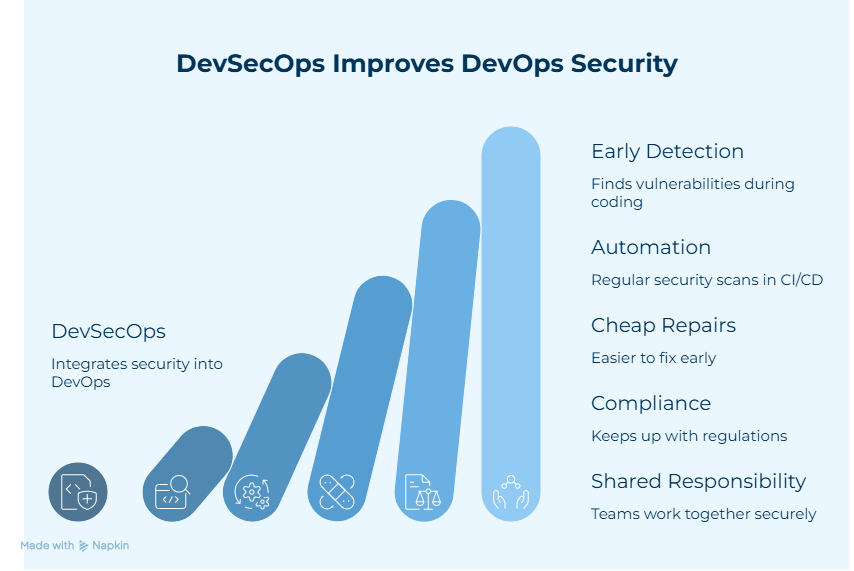
Essential Improvements introduced by DevSecOps are:
- Early Vulnerability Detection: Security problems are found while coding and testing, not after the software is deployed.
- Automated Security Validation: CI/CD pipelines include security scans and tests to make sure that checks are done on a regular basis.
- Cheap Repairs: Fixing security holes earlier in development makes them cheaper and easier to fix later.
- Better Readiness for Compliance: Regular security checks and monitoring help keep up with rules and regulations.
- Shared Security Responsibility: The development, operations, and security teams work together to keep systems secure.
This shows how security is emphasized as organizations think about DevOps vs DevSecOps propositions in today’s software delivery environments.
Why is DevSecOps Important in Modern Development?
Cloud platforms, microservices, APIs, and containerized environments are widely used to build modern apps. These architectures make systems more scalable and flexible, but they also make them more vulnerable to attacks and security risks. This is why organizations are paying more attention to DevOps vs DevSecOps strategies.
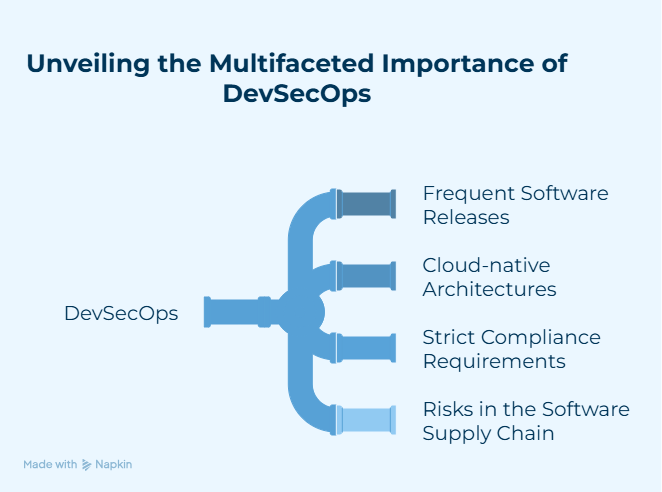
DevSecOps helps businesses deal with several problems that arise in modern development:
- Frequent Software Releases: If security isn’t built early, faster release cycles make it more likely that vulnerabilities will be introduced.
- Cloud-native Architectures: Distributed systems need constant monitoring and automated security checks.
- More Strict Compliance Requirements: Companies must follow rules about protecting data and keeping infrastructure safe.
- Risks in the Software Supply Chain: Open-source dependencies and third-party libraries can make software less secure.
Organizations can keep up the pace without sacrificing security by adding automated security checks to their development workflows. This is impactful in the growing debate over DevOps vs DevSecOps, in which security is an indispensable part of the software delivery process.
DevOps vs DevSecOps: Practices and Tools
When you look at the development practices and security tools used throughout the pipeline, it’s easier to evaluate the comparison of DevOps vs DevSecOps. DevOps is all about automating tasks and getting things done faster. DevSecOps, on the other hand, adds security tools and validation directly into the development process.
| Area | DevOps Approach | DevSecOps Approach |
| Development Practices | Focuses on rapid development, continuous integration, and automated deployments. | Development includes secure coding standards and security checks at multiple stages of the pipeline. |
| Security Practices | Security checks usually occur toward the end of development as part of broader DevOps security practices. | Security testing is continuous and integrated into development workflows from the beginning. |
| Code Review | Reviews focus mainly on functionality, performance, and code quality. | Reviews also assess potential vulnerabilities and insecure coding patterns. |
| Infrastructure Validation | Infrastructure checks ensure stability and deployment reliability. | Infrastructure scanning identifies misconfigurations and potential cloud security risks. |
| Security Tools | Monitoring and deployment tools are commonly used to manage builds and infrastructure. | Specialized DevSecOps tools such as SAST scanners, DAST testing tools, dependency vulnerability scanners, and container security platforms are integrated into pipelines. |
| Monitoring and Risk Detection | Monitoring focuses on application performance and uptime. | Continuous monitoring helps detect threats, vulnerabilities, and compliance issues in real time. |
This also clearly explains what tools are used in DevSecOps. DevOps is all about tools that make automation and faster delivery possible. DevSecOps, on the other hand, adds security tools that help with continuous scanning, monitoring, and secure development practices throughout the pipeline.
DevOps vs DevSecOps: Cost Comparison
When security problems are detected late in the software development process, it usually costs more to fix them and puts the business at greater risk. When businesses look at DevOps vs. DevSecOps, they often compare how each method affects the costs of development and security over time.
| Cost Consideration | DevOps | DevSecOps |
| Fixing Security Issues | Vulnerabilities are often discovered later in testing or production, which can make remediation more expensive and time-consuming. | Security checks happen earlier in development, making vulnerabilities easier and cheaper to fix. |
| Tool Investment | Teams mainly invest in automation, CI/CD, and infrastructure management tools. | Additional investment may be required for security testing, vulnerability scanning, and monitoring tools. |
| Compliance Management | Compliance reviews are often handled manually and closer to release cycles. | Automated security checks help support continuous compliance monitoring. |
| Operational Risk | Late detection of vulnerabilities can increase long-term operational and security risks. | Continuous monitoring and security testing reduce long-term risk exposure. |
Even though DevSecOps implementation may require more charges up front for security tools and processes, it usually saves money in the long run by finding vulnerabilities sooner and lowering the chance of costly security incidents.
How to Implement DevSecOps in an Organization?
To make DevSecOps work, security needs to be built into the development process instead of being added as a separate step. In this discussion of DevSecOps vs DevOps, they often switch to DevSecOps to make their pipelines more secure and effective.
Steps for DevSecOps Implementation
Most of the time, teams follow these steps to learn how to put DevSecOps into practice in an organization:
- Look at your current DevOps pipelines to see where you can add security checks.
- Add automated security testing to find weaknesses while the software is being built.
- Add security tools to CI/CD workflows so that they are always checked.
- Use shift-left security methods to deal with risks earlier in the lifecycle.
- To cut down on vulnerabilities at the source, teach developers how to code securely.
- Allow for constant monitoring in production to find threats and mistakes in configuration.
This structured method helps make security a part of development processes and shows the real comparison of DevOps vs DevSecOps.
What are the Benefits of DevSecOps?
In the debate of DevOps vs DevSecOps, the latter often outperforms the former.
Some of the most important benefits of DevSecOps are:
- Finding vulnerabilities early.
- Lower cost of fixing security problems.
- Software releases that are faster and safer.
- Ongoing monitoring of compliance.
- Better teamwork between the security and development teams.
These benefits make organizations choose DevSecOps over DevOps in the comparison of DevOps vs DevSecOps when they are deciding which development framework will be more convenient for them.
When Should Companies Adopt DevSecOps?
When talking about DevOps vs DevSecOps, companies often think about when they need to add security directly to their development and deployment processes. Companies should start using DevSecOps when,
- CI/CD pipelines are already set up to run automatically. This makes it easier to add automated security testing and validation.
- Cloud-native architectures are used to build applications, and distributed systems need to be watched and protected all the time.
- They have to follow strict rules about security and compliance, like protecting data and following the law.
- Development cycles are quick and happen often, so security checks need to keep up with the quick releases.
- Apps depend on APIs and microservices, which makes them more vulnerable to security threats.
At these stages, using DevSecOps helps companies build security right into their development processes. This is an important aspect of the evolving DevOps vs DevSecOps approach.
Is DevSecOps Replacing DevOps?
No, DevSecOps is not replacing DevOps.
DevSecOps is built on the DevOps model by adding security practices directly into the process of developing and deploying software. DevOps is all about making it easier for teams to work together so that software can be delivered faster. This is how DevSecOps makes security a constant and shared responsibility throughout the entire lifecycle.
In the debate of DevOps vs DevSecOps, DevSecOps is often thought of as the next step for DevOps, where security is built into the process of delivering software instead of being a separate step at the end.
Key Takeaways
- The comparison of DevOps vs DevSecOps reveals how modern development practices are changing and making security a key part of the software lifecycle.
- DevOps helps development and operations teams to collaborate in an effective manner so that software can be released faster, and deployment processes can be made easier.
- DevSecOps takes these best practices a step ahead and adds automated security testing, vulnerability scanning, and compliance checks to every step of the CI/CD pipeline.
- Adding security early in the development process helps teams find and fix problems faster, which lowers long-term risks and costs of fixing them.
- Organizations should evaluate the DevOps vs DevSecOps approach to help them choose development strategies that allow for quick innovation while maintaining high security standards in cloud-native environments.
Conclusion
It’s not enough for modern software development to just deliver faster; it also must deliver securely at scale. When you explore the propositions of DevOps vs DevSecOps, you will realize that adding security to every step of the pipeline helps you lower risks while maintaining the speed of development. DevSecOps helps teams make apps that work well and are resilient enough to work in today’s complicated digital realm.
Confused about which method works best with your development plan? Let us help you explore DevOps vs DevSecOps and start building secure and efficient software. Let’s connect!
Frequently Asked Questions
Q1. Which is Better DevSecOps or DevOps?
When comparing DevOps vs DevSecOps, the former is best for speed and efficiency, while the latter is ideal if security is your top concern because it includes security at every stage of the software development.
Q2. What are the 7 C’s of DevOps?
The 7 Cs are Continuous Development, Integration, Testing, Deployment/Delivery, Monitoring, Feedback, and Operations. They create a loop that emphasizes automation, teamwork, and dependable software releases.
Q3. Is DevOps a end-job?
No, DevOps jobs are changing into roles like Platform Engineering, SRE, Cloud Engineering, and DevSecOps. This means that teams need to upskill themselves and learn automation, cloud, and security to remain ahead in the competition.
Q4. Does DevSecOps Require Coding?
Yes, you usually need to write code to automate security processes and add checks to CI/CD pipelines.
Q5. Will AI Replace DevOps?
No, AI can automate some tasks, but it can’t replace the strategic thinking and problem-solving skills that DevOps professionals have, especially when you compare DevOps vs DevSecOps strategies.
Q6. What is the Main Difference Between DevOps and DevSecOps?
In the comparison of DevOps vs DevSecOps, the former focuses on speed, collaboration, and efficiency, while the latter adds security to the development process
Q7. What are the 5 Pillars of DevOps?
Culture, Automation, Lean, Measurement, and Sharing are the five pillars, also known as CALMS. They help break down barriers, make it easier for teams to collaborate, automate tasks, and speed up and make software delivery more reliable.
Q8. Which Tool is Mostly Used in DevOps?
Jenkins is a Java-based, open-source platform for continuous integration that is one of the most popular DevOps tools. It lets developers quickly commit code, run automated tests, and deploy apps.


Recent Posts
- DevOps vs DevSecOps: What’s the Difference?
- Hire Azure DevOps Developers Who Deliver Faster, Secure CI/CD Pipelines
- Azure Virtual Machines vs Containers: What’s Right for Your Infrastructure?
- AI Foundry Architecture Explained: How Enterprise AI Is Designed at Scale
- Azure API Management: What Is It and How Does It Work?